
Three years later the backlash to the Barbie movie is just as relevant as ever
Why were so many people outraged by how Barbie treated men? Why was no one outraged by how Oppenheimer treated women?

Remember three years ago? Summer of 2023?
You couldn't open the internet without tripping over another hot take about The Barbie Movie.
Three years out and the reaction to Barbie ended up being far more revealing than the movie itself.
In fact, there is no better mirror I can think of for the current state of gender politics than the reaction to the Barbie movie.
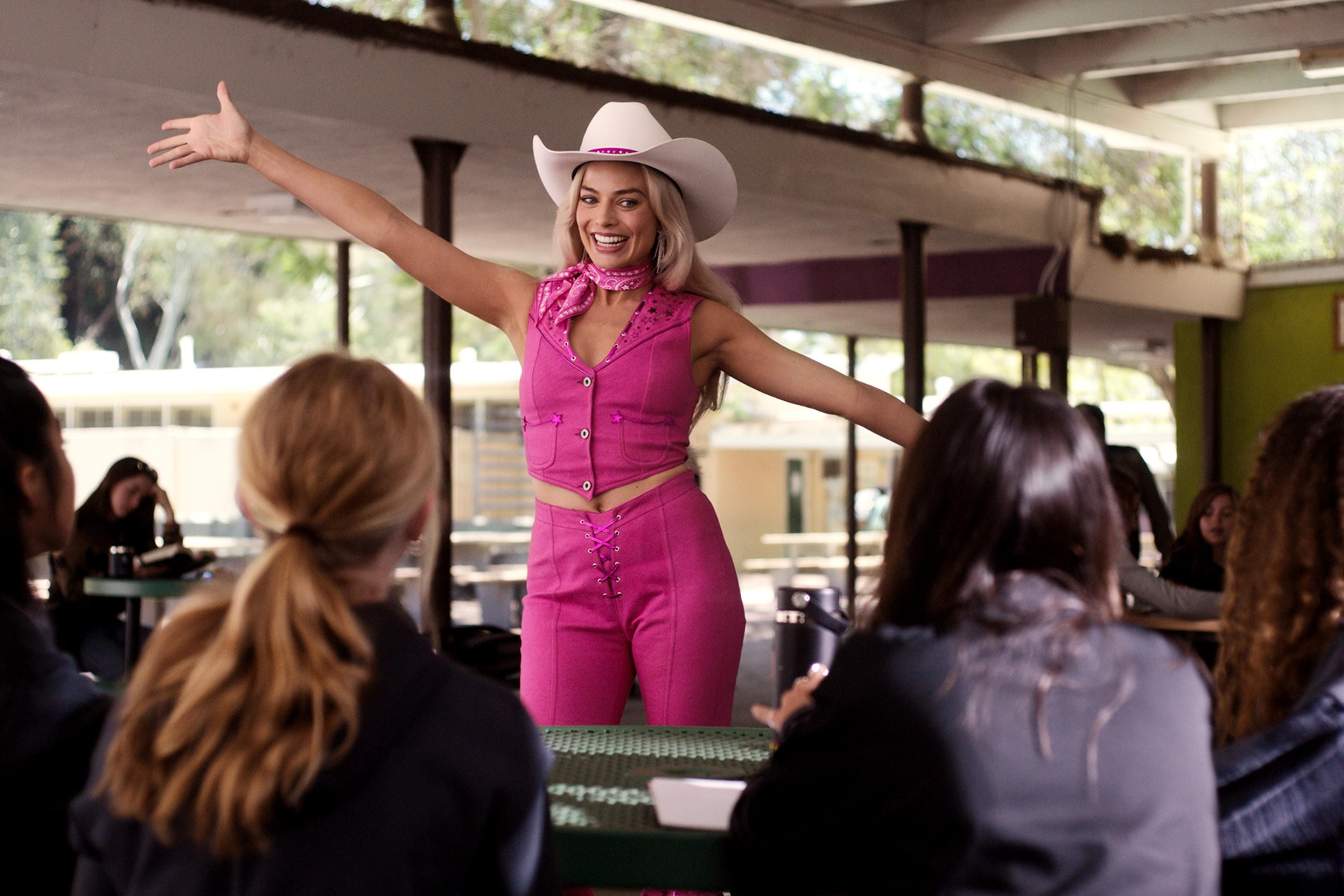
For half a year, people were utterly outraged by it.
Thousands boycotted not just the movie, but Mattel, the company that makes barbie dolls.
Ben Shapiro live-streamed lighting barbie dolls on fire.
Matt Walsh called it “the most aggressively anti-man, feminist propaganda fest ever put to film.”
Jack Posobiec said The Barbie Movie was “the most anti-male film ever made.”
If you only heard the discourse surrounding the movie, you would think that the Barbie Movie lined all the men up and beat them bloody.
For it to be the most anti-male film ever made, surely all the men were assaulted, humiliated and oppressed. Surely the women were power-hungry, bloodthirsty dictators….
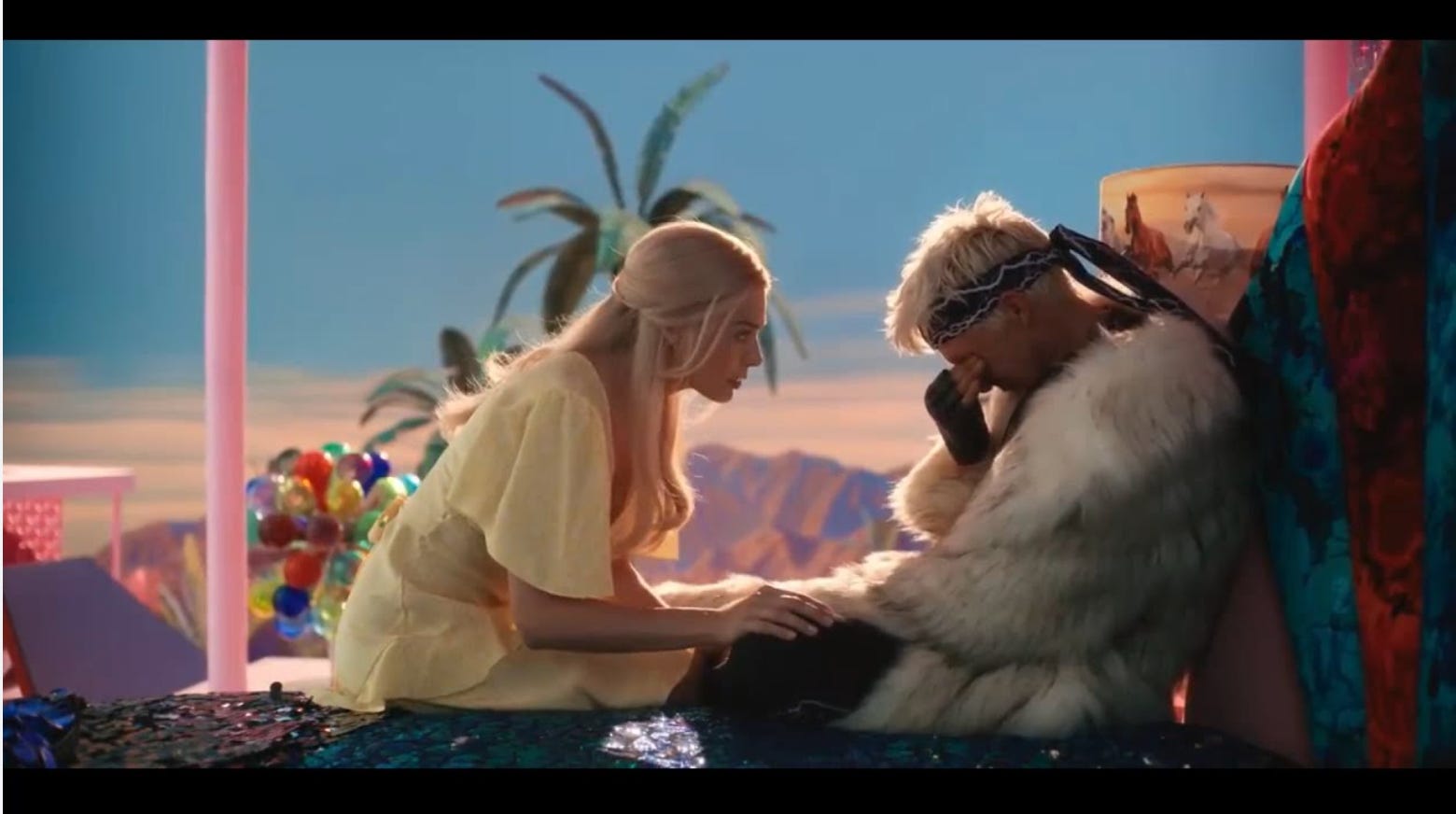
But Ken was not abused, sexually assaulted, forced into servitude or killed. The emotional climax of the film isn’t Barbie’s triumph over men—it’s Ken realizing he has value outside of serving someone else.
Men were not abused in Barbie land, they just weren’t the main characters.
Yet millions of people experienced the film as a giant “F* YOU!” to men.
Conversations about Barbie mirror our current conversations about feminism.
In the not-so-distant past women were not invited to participate in global conversations.
And now women are everywhere: women CEOs and political leaders, women choosing not to marry, women astronauts, women’s sports, women delaying motherhood, women in politics, women in STEM.
People are responding with, “Ok enough already with the female empowerment!! You’re equal already! In fact, women are the privileged ones now! What about the men?!?! Enough about women!”
But visibility isn’t the same thing as equality.
Discussion isn’t the same thing as power.
Media attention isn’t the same thing as material rights.
Words aren’t the same thing as action.
A few weeks ago I came across an article where one line read, “Think of movie with a straight male protagonist (yes, Hollywood really used to make movies like that)….”
That article was published the very same week that a study came out finding that of the most popular movies of the last three years, more films starred a man named Chris than a woman over 60.
85% of movies feature more male than female characters. Only 7% of movies have more female than male characters.
The difference between reality and the perception of reality is jarring.
It reminds me of Dale Spender, who in her book Man Made Language found that when women spoke for 30% of a conversation, men perceived them as dominating the conversation. In conversations where women spoke 25% of the time or less, men reported those conversations as “equally balanced.”
Some interesting numbers to put to the phenomenon that equality feels like oppression when you're accustomed to privilege.
The most fascinating part about the reaction to the Barbie movie is how quickly and vehemently many people interpret women occupying the center of the story as outright hostility towards men.
Barbie was not hostile towards Ken, but her not orbiting and centering him was interpreted as hatred of him. A movie that centered women was widely interpreted as an attack on men.
Similarly, feminism does not seek to subjugate men—to lock them up, harm them or rule over them. It simply asks that women be given the same rights as men and autonomy over their own lives.
And this seeking equality is so very, very often interpreted as anti-men.
This isn’t new- women were called man-haters for asking for the right to vote in the 1910s, for asking to not be fired for being pregnant in the 1960s, for wanting bodily autonomy in the 2020s.
Predictably whenever women ask for equality, they are told they hate men.
Which is why, three years later, The Barbie Movie conversation is worth revisiting.
It’s a tangible example of what response you can expect if you are a woman asking for equality. Especially publicly.
Meanwhile, a movie that treats women far worse than Barbie treats men won best movie of the year in 2023.
The discrepancy in outrage between how Barbie treats men and how Oppenheimer treats women boiled my blood so much that I simply had to write an article about it even though at the time, the subject of this Substack was not patriarchy.
I’ll include that article below. Because three years later and the reactions to these two films remains one of the clearest examples of how accepted and invisible patriarchy is in our society:
Barbie and Oppenheimer…. which is the one with the plastic boobies again?
The Golden Globes were held this past Sunday.
By way of introducing the biggest movies of the year the host Jo Koy said,
“Oppenheimer is based on a 721-page Pulitzer Prize-winning book about the Manhattan Project, and Barbie is on a plastic doll with big boobies.”
Don’t you worry, we’ll return to the Barbie portion of that delightful comment momentarily.
But as it happens, I watched Oppenheimer for the first time last Friday night. So let’s talk about this Pulitzer-Prize worthy movie first.
I had heard the rave reviews. I had heard filmmaker Paul Schrader call the film the best and most important film of the century!1 I was pumped to finally see it!
I started the film with high expectations and an open mind, but as the movie progressed my brows got more and more furrowed, my eyes became more and more rolly, my disgruntled snorts became more and more disgruntled.
What caused my snorty demeanor you ask?
It began 21 minutes into the movie when we hear a woman speak for the first time. It was nice to finally hear a woman’s voice, but the brows furrowed when less than a minute later the first speaking woman of the film was naked atop the leading man.
They continued to furrow when virtually every piece of dialogue out of a woman’s mouth served to support to the leading man.

I quickly realized the women in Oppenheimer were textbook cases of the PDG: Patriarchy’s Dream Girl. The role of a PDG is simply to offer unfailing support to her man while he does whatever the hell he wants. No conditions necessary. (Also no personality or desires necessary.)
In Oppenheimer’s case this included cheating on his wife with his ex, never be present to help his wife (when she could clearly use some), oh and inventing the thing that killed hundreds of thousands of people. Despite all that, Oppenheimer’s wife Kitty, played by Emily Blunt, supports her man no matter what and asks for nothing at all.
This is poignantly depicted in the scene when Oppenheimer first admits to his wife that he cheated on her. Seconds after this confession, without a trace of tears or anger, his wife’s exact quote is, “Now you pull yourself together. You know people here depend on you.”

I actually had to pause the movie after this line to let out a disbelieving guffaw. And to tell my husband that if he ever cheats on me, it will not be his career I am concerned about.
By far Emily Blunt’s longest screen time is when she is in court defending her husband.
Florence Pugh’s character fairs even worse. Despite the fact that in real life Jean Tatlock was an accomplished pediatric psychiatrist and the fact that she was actually the one who refused to marry Robert after he proposed twice, in the movie she is depicted as little more than a hopelessly devoted Oppenheimer sex doll.
Of her 5 minutes and 48 seconds of total screen time, 4 of those are spent naked.


Barbie and Oppenheimer…. which is the one with the plastic boobies again???
But yes, circling back to the Golden Globes opening monologue, Oppenheimer is a very important historical biopic. Barbie is just a girlie movie about a doll.
Let’s take a look at some stats of how each movie treats the opposite sex.
Oppenheimer, a movie that film critic Humayun Arif called the landmark film of the century for filmmakers runs for 180 minutes. 21 of those minutes include a woman in conversation. That’s 12% of the movie.
Barbie, a movie that Piers Morgan called “an assault on all men” runs for 114 minutes. Around 59 of those minutes include a man in conversation. That’s 51% of the movie.
Oppenheimer, marketed as a movie for everybody, has a cast of 115 people. 13 of those are women. That’s 11% female.
Barbie, marketed as a movie for girls, has a cast of 70 people. 27 of those are men. That’s 39% male.
Oppenheimer, “based on a Pulitzer-Prize winning book,” brings the first woman on screen 21 minutes into the film. She is nude and having sex less than a minute later.
Barbie, “based on a plastic doll with big boobies,” brings the first man on 7 minutes into the film. There are no sex scenes or nudity.
The irony of course is that Barbie was trying to hold up a mirror to how society actually treats women by flipping the script and treating men that way.
So based on the winner for best film of the year, if Barbie wanted to be an actual mirror, it would have an 11% male cast and only show men on screen for 12% of the movie. Ken would have no personality, no character arc and would have been naked his first minute after appearing on screen. Then he would have remained naked for the rest of his 4 minutes of screen time. (cAn yOu ImAgiNe tHe OuTraGe??)
Barbie was trying to make a point about how differently society treats men and women. Oppenheimer was just trying to make a movie. Given these goals, the discrepancy in representation of the two genders in these films is WILD!
Surely Nolan would be slammed for his portrayal of women and Gerwig praised for her portrayal of men?
You would think so wouldn’t you?
And yet…. without seeking them out this year I have come across dozens and dozens of critiques of Greta Gerwig’s portrayal of men in Barbie. From Tiktok. From my Google homepage. From my real life conversations.
I remember when Ben Shapiro burned barbies live in protest, when Jack Posobiec called the film “the most anti-male film ever made,” when tens of thousands called for the boycott of not just the movie but barbies in general based on its depiction of men.
My shock in watching Oppenheimer was precisely because I had come across exactly ZERO critiques of Christopher Nolan’s representation of women until I sought them out myself to write this article.
They were there but they were infinitesimal compared to the national outrage against Gerwig.
Piers Morgan said of the Barbie movie “If I made a movie that treated women the way that Barbie treats men, people would want me executed.”
But Christopher Nolan DID make a movie that arguably treats women WORSE than the way Barbie treats men.
And we did not execute him.
We awarded him best director.

Oppenheimer pulled away the most awarded film of the Golden Globes this year. Winning for best film, best director, best leading actor, best supporting actor and best score.
Ok, but this is just two films, not indicative of anything more
I wish this was just a random case of two movies.
Alas, let’s look at more numbers.
Despite the number of men and women in the world being roughly equal, in the most popular films of 2022, 65.4% of the speaking roles went to men, leaving 34.6% to women.11
In other words- there are two male characters for every one female- a ratio that has remained shockingly stable over the past 70 years of film.

To pass the Bechdel test a movie needs to have two women characters who talk to each other about something other than a man.
Oppenheimer does not pass the test.
Two women are never seen talking to each other, and almost never say anything that isn’t about a man.
Barbie, on the other hand, does pass the reverse Bechtel test.
How many movies pass the Bechtel test might you ask?
Less than half.
LESS. THAN. HALF. of the world’s most popular 1200 movies in the past 40 years include two women talking about something other than a man.12
By contrast, 95% of films pass the reverse Bechtel test where two men talk to each other about something other than a woman.13
And this despite the fact that movies that pass the Bechtel test make more money.14
In conclusion
Jo Koy, allow me to re-write your joke.
Barbie is the highest grossing film of the year, Warner Brothers’ highest grossing movie of all time and the highest grossing movie ever by a female director. Its insightful portraiture of our patriarchal society is sure to be studied and discussed for decades to come.
Oppenheimer is a war movie that depicts women as plastic dolls with boobies.
Want to gather to de-patriarchify our brains together? Cool me too. Come join us at our Matriarchal Blessing book club. This quarter we will read The Flowering Wand: Rewinding the Sacred Masculine by Sophie Strand. We will meet on zoom in July to discuss. Join us:
'Does it pass the Bechdel test' is on tap in my household for everything starting with the books my boys read in elementary school. My oldest would get so damn offended when I noted that GenericHeroStory treated women like furniture. It sent him on a lifelong quest to prove to me that it is Not True that the medieval hero genre cannot pass the Bechdel test.
At 18... he recently came to me and told me I was right.
So... this one question drove him to read book after book after book... all in a quest to prove me wrong and he couldn't and now won't even read fanfic that doesn't pass the Bechdel test.
I win.
Thank you for this. As a woman born in 1957 I have been so steeped in the patriarchy that I can barely perceive up from down. The constant mind bending that we have had to do all these years has been so exhausting and has caused me so much anxiety. Thanks for letting me know I am not crazy.